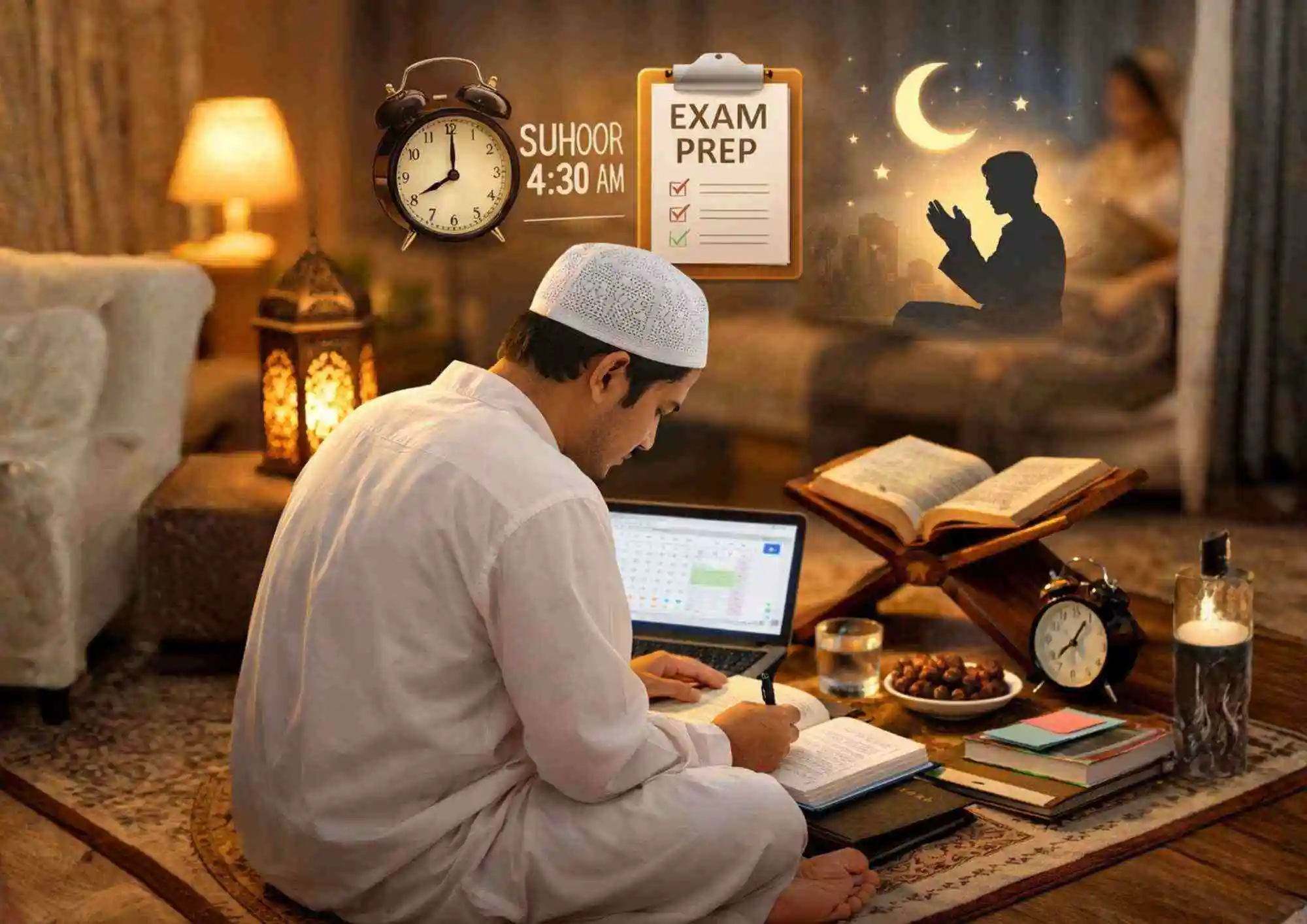
Exams During Ramadan? Here’s How to Study Smart While Fasting.
Exams are stressful enough, now add fasting, late nights, and changing routines to the mix. Sound familiar? If you’re a student trying to balance revision with Ramadan, you’re probably wondering how to stay focused without feeling drained. The good news is, it’s absolutely possible to study smart while fasting, you just need the right approach. In this blog, we’ll explore practical ways to manage your energy, organise your study schedule, and maintain concentration during Ramadan. If you want to prepare confidently for exams without burning out, keep reading this guide is for you.
Understanding the Challenge of Exam Preparation During Ramadan.
Preparing for exams is demanding on its own. Now imagine doing it while fasting, adjusting sleep schedules, attending prayers, and managing family commitments. That’s why exams during Ramadan feels different and often more challenging for many students.
Changes in Routine and Energy Levels.
Ramadan naturally shifts your daily rhythm. Late-night prayers and early Suhoor meals can affect sleep quality. As the day progresses, energy levels may dip, especially in the afternoon. This makes long, continuous study sessions harder to manage.
During exams during Ramadan, students often notice-
- Reduced concentration in the later hours of the day.
- Slower memory recall when feeling tired.
- Difficulty staying consistent with revision schedules.
Why Focus and Time Management Become Crucial?
Because energy is limited, time must be used more intentionally. Instead of studying for long hours, students need shorter, focused sessions. Smart planning becomes essential. Many effective Ramadan exam tips revolve around identifying peak energy hours often after Suhoor or a few hours after Iftar and scheduling important subjects during that time.
Common Struggles Students Face.
Students frequently experience-
- Feeling guilty for not studying “enough”.
- Trying to push through exhaustion.
- Comparing their progress with others.
But Ramadan isn’t about overworking; it’s about balance and discipline.
Why Planning Is the Key to Success?
When routines change during Ramadan, planning becomes your strongest tool. Without a clear structure, exams during Ramadan can quickly feel overwhelming. But with a realistic plan, you can stay productive without exhausting yourself.

Create a Practical Study Timetable.
Instead of forcing long study hours, build your schedule around your natural energy levels. Many students focus better-
- Early morning after Suhoor.
- A few hours after Iftar.
- Late evening before Taraweeh (if energy allows).
Identify Priority Topics.
Ramadan is not the time to revise everything randomly. Smart exams during Ramadan means prioritising high-weightage topics and areas where you feel less confident. Ask yourself-
- Which chapters are most likely to appear in the exam?
- Where do I lose marks most often?
- What needs revision versus fresh learning?
Balance Study and Rest.
Planning also includes rest. Schedule short breaks, hydration after Iftar, and proper sleep. Ignoring rest reduces efficiency and increases stress.
Remember, success during Ramadan doesn’t come from studying more, it comes from studying smartly. When you organise your time intentionally, exams during Ramadan becomes manageable, structured, and far less stressful. A thoughtful plan transforms pressure into confidence and helps you stay consistent throughout the holy month.
Smart Study Strategies While Fasting.
Fasting doesn’t mean you have to pause your goals. It simply means you need to approach exams during Ramadan differently. The key is to study smarter, not harder, so you can protect your energy and still make steady progress.
Tackle Difficult Subjects at the Right Time.
Identify when you feel most mentally active. For many students, this is either early morning after Suhoor or a couple of hours after Iftar. Use this time for tougher subjects or problem-solving practice. Lighter revision, like reviewing notes or summaries, can be done when your energy is lower.
Focus on Active Learning.
During exams, avoid passive reading for hours. Instead-
- Solve past papers or practice questions.
- Test yourself without looking at notes.
- Summarise key concepts in your own words.
- Revise high-weightage areas first.
Protect Your Energy.
Hydration and balanced meals during non-fasting hours play a big role in concentration. Sleep is equally important. A well-rested mind absorbs information faster than a tired one.
Balancing Worship and Academic Goals.
The challenge many students face is finding harmony between worship and exams during Ramadan without feeling guilty or overwhelmed.
Set Clear Intentions.
Start by reminding yourself that seeking knowledge is also a meaningful pursuit. When you approach with the intention of self-improvement and responsibility, your studies become part of your growth journey. This mindset reduces internal conflict and helps you stay focused.
Create a Balanced Routine.
Balance doesn’t mean dividing time equally; it means organising it wisely. A practical schedule may include-
- Study sessions in the morning or post-Iftar.
- Dedicated time for prayers and reflection.
- Short rest periods to maintain energy.
Stay Motivated and Positive.
There may be days when energy feels low. That’s normal. Focus on consistency rather than intensity. Even small, steady progress supports effective exams during Ramadan.
Managing Energy and Staying Focused.
One of the biggest concerns students have about exams during Ramadan is energy. Fasting changes your routine, sleep cycle, and eating habits, so it’s completely normal to feel a little different.
Understand Your Energy Patterns.
Not every hour of the day will feel equally productive. Some students feel most alert after Suhoor, while others concentrate better a few hours after Iftar. Pay attention to when your mind feels sharp and schedule important subjects during that time.
Eat and Hydrate Wisely.
What you eat during Suhoor and Iftar directly affects focus. Choose balanced meals that include-
- Complex carbohydrates for steady energy.
- Protein to stay full longer.
- Plenty of water between Iftar and Suhoor.
Avoid excessive sugary foods, as they can cause energy crashes later in the day. Many effective Ramadan exam tips highlight the importance of hydration for maintaining concentration.
Take Smart Breaks.
Studying non-stop while fasting can lead to mental fatigue. Instead-
- Study in short sessions.
- Take 5–10 minute breaks.
- Step away from screens occasionally.
Protect Your Sleep.
Late nights and early mornings can reduce sleep hours. Try to maintain a consistent sleep schedule to avoid burnout.
Managing energy isn’t about doing less, it’s about doing what works best for your body. When you combine mindful eating, smart scheduling, and focused study blocks, exams during Ramadan becomes more balanced, productive, and far less stressful.
Mistakes to Avoid During Exam Preparation in Ramadan.
Ramadan requires a different rhythm, and ignoring that can make exams during Ramadan much harder than it needs to be. While fasting builds discipline, certain habits can reduce productivity and increase stress if you’re not careful.
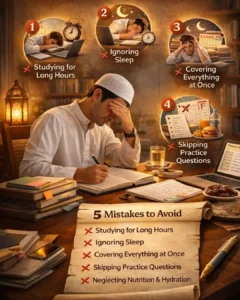
- Studying for Long, Exhausting Hours.
One common mistake is forcing yourself to study for extended hours without breaks. Fasting already requires physical energy, so overloading your brain can lead to burnout. Instead of long sessions, focus on short, structured study blocks.
- Ignoring Sleep.
Late nights for revision followed by early Suhoor can quickly reduce sleep. Lack of rest affects memory and concentration. One of the most practical Ramadan exam tips is to protect your sleep as seriously as your study schedule.
- Trying to Cover Everything at Once.
Many students panic and attempt to revise the entire syllabus in a few days. During Ramadan, prioritising high-weightage topics and weak areas is far more effective than rushing through everything.
- Skipping Practice Questions.
Passive reading may feel easier when energy is low, but exams test application. Avoid the mistake of only reviewing notes. Practising exam-style questions builds confidence and improves recall.
- Neglecting Nutrition and Hydration.
Heavy, sugary meals at Iftar can cause energy crashes. Poor hydration can also reduce focus. Balanced meals and steady water intake support better concentration.
The goal during Ramadan isn’t perfection, it’s balance. When you avoid these common mistakes and follow realistic Ramadan exam tips, exam preparation during Ramadan becomes manageable and structured. Smart planning and steady effort will help you stay consistent without feeling overwhelmed.
Final Thoughts: Studying Smart, Not Hard.
Preparing for exams during Ramadan may feel challenging at first, but with the right mindset and planning, it becomes completely manageable. Exams during Ramadan is not about studying longer hours, it’s about studying smarter. When you understand your energy patterns, create a realistic schedule, prioritise important topics, and take care of your health, you can stay consistent without feeling overwhelmed.
Simple adjustments like short study sessions, proper sleep, balanced meals, and focused revision can make a big difference. Following practical Ramadan exam tips helps you maintain both academic performance and spiritual balance.
Remember, Ramadan teaches discipline, patience, and focus, the same qualities needed for exam success. When you approach your studies with intention and structure, you don’t just prepare for exams; you build resilience and confidence. With balance and smart planning, you can succeed academically while fully embracing the spirit of Ramadan. . For more details WhatsApp us at 0503765193
Frequently Asked Questions (FAQs)
Q. How can I manage exam preparation during Ramadan without feeling exhausted?
Focus on short, structured study sessions during your peak energy hours usually after Suhoor or a few hours after Iftar. Prioritise important topics and take proper rest to avoid burnout.
Q. Is it better to study before Iftar or after Iftar?
It depends on your energy levels. Some students focus better in the morning, while others feel more alert after Iftar. Choose the time when your concentration is strongest.
Q. How many hours should I study during Ramadan?
Quality matters more than quantity. Even 2–4 focused hours daily can be effective for exam preparation during Ramadan if used wisely.
Q. How can I reduce stress while fasting and studying?
Plan your day in advance, avoid comparing yourself with others, and keep realistic daily goals. Consistency is more important than intensity.
Need Extra Support This Ramadan?
At Future Ethics Academy, we provide focused study plans, exam-oriented practice, and personalised support to help students stay confident and prepared even during busy months like Ramadan.
👉 Visit futureethicsacademy to explore our programmes and get started today.