
10 Common Exam Mistakes Students in UAE Should Avoid
Exams can be stressful, but sometimes it’s not a lack of studying that holds students back, it’s small mistakes made along the way. Many students in the UAE work hard, yet still lose marks because of avoidable errors they don’t even realise they’re making. From poor time management to last-minute panic, these mistakes can quietly affect performance on exam day. In this blog, we’ll uncover some of the most common exam mistakes students in the UAE face and why avoiding them can make a big difference. A little awareness now can help you feel more confident, prepared, and in control when it matters most.
Why Understanding Exam Mistakes Matters
One big reason exam mistakes happen is pressure. During last-minute, stress often pushes students to rush, skip planning, or revise the wrong things. This leads to confusion and unnecessary errors, even when the student knows the subject well. Awareness helps students pause, refocus, and revise smarter.
Understanding exam mistakes also helps students use their time better. Instead of repeating habits that don’t work, they can apply practical exam tips that actually improve performance.
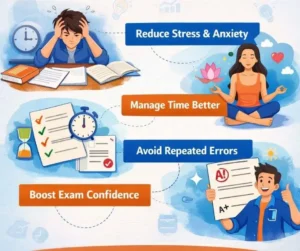
Here’s why recognising exam mistakes is so important
- It helps students avoid repeating the same errors.
- It improves confidence and reduces exam anxiety.
- It makes last-minute exam preparation more organised.
- It leads to better time management in exams.
Mistake #1 Starting Last-Minute Exam Preparation Without a Plan.
One of the most common exam mistakes students make is beginning last-minute exam preparation without a clear structure. When there’s no plan, revision often becomes rushed and ineffective.
Here’s why studying without a plan causes problems
- Students jump randomly between chapters, leading to confusion.
- Too much time is spent on less important topics.
- High-weightage areas are often ignored.
- Stress increases, making it harder to focus.
How to fix this mistake
- Create a short, realistic revision plan.
- List key topics and prioritise important chapters.
- Break study time into small, focused sessions.
- Set clear goals for each revision block.
Mistake #2 Trying to Study Everything at the Last Moment.
What students do is they try to cover the entire syllabus at once. When time is short, this approach usually creates panic rather than progress.
Why this mistake hurts exam performance
- The brain becomes overloaded with too much information.
- Important concepts don’t get enough revision time.
- Confidence drops when students realise they can’t finish everything.
- Stress increases, affecting focus and recall.
How to avoid this mistake
- Focus on high-scoring and familiar topics first.
- Strengthen areas you already understand rather than starting new ones.
- Use short summaries and formula sheets for quick revision.
- Practise likely exam questions instead of reading entire chapters.
Mistake #3 Relying Only on Reading Notes.
Students believe that simply reading notes again and again is enough during last-minute exam preparation. While reading may feel productive, it often doesn’t prepare students for actual exam questions.
Why this approach doesn’t work well
- Passive reading doesn’t test understanding.
- Information is quickly forgotten under exam pressure.
- Students struggle to apply concepts to numerical or application-based questions.
- Confidence drops when questions look unfamiliar.
How to avoid this mistake
- Test yourself by recalling answers without looking at notes.
- Solve practice questions and past exam papers.
- Explain concepts out loud to check understanding.
- Use quick summaries instead of rereading full notes.
Mistake #4 Ignoring High-Weightage Topics.
During last-minute exam preparation, students should treat all topics as equally important. When time is limited, this can cost valuable marks. Some chapters and question types appear more often in exams, yet students sometimes spend too much time revising low-impact areas.
Why ignoring high-weightage topics is a problem
- Marks are lost in sections that matter the most.
- Revision time gets wasted on less important chapters.
- Students feel unprepared for common exam questions.
- Confidence drops when familiar patterns appear in the exam.
How to avoid this mistake
- Identify high-weightage chapters from the syllabus or past papers.
- Revise frequently asked questions and key concepts first.
- Practice numerical or theory that commonly appear in exams.
- Use quick exam revision strategies to strengthen scoring areas.
Mistake #5 Poor Time Management During Exams.
One of the most costly exam mistakes students make isn’t about preparation, it happens inside the exam hall. Poor time management can prevent students from attempting all questions, even when they know the answers.
Why poor time management affects performance
- Too much time is spent on one difficult question.
- Easy or scoring questions are rushed or skipped.
- Panic increases as the exam time runs out.
- Silly mistakes happen due to pressure.
How to avoid this mistake
- Practise answering questions with a timer.
- Learn when to skip and return to tough questions.
- Divide exam time based on marks and sections.
- Use quick exam revision strategies like mock tests and sample papers.
Mistake #6 Skipping Revision of Basics.
Many students focus only on advanced topics and overlook the basics. This is a common exam mistake students make, and it often leads to unnecessary errors. Strong fundamentals are the foundation for solving even the toughest questions.
Why skipping basics causes problems
- Simple questions lead to careless mistakes.
- Complex problems feel harder without clear fundamentals.
- Confidence drops when students get stuck on basic steps.
- Marks are lost on easy scoring areas.
How to avoid this mistake
- Revise key definitions, formulas, and core concepts.
- Practise basic examples before moving to advanced problems.
- Use quick exam revision strategies like formula recap sheets.
- Double-check fundamental steps while solving questions.
Mistake #7 Not Practising Exam-Style Questions.
Knowing the theory is important, but exams test application, not memory alone.
Why skipping exam-style practice is risky
- Questions feel unfamiliar on exam day.
- Students struggle to apply concepts under time pressure.
- Time management becomes difficult.
- Confidence drops, even when topics are known.
This is where practical tips make a real difference.
How to avoid this mistake
- Solve past exam papers or sample questions.
- Practise questions within a time limit.
- Analyse marking schemes to understand answer structure.
- Use quick exam revision strategies like mixed-question practice.
Mistake #8 Letting Stress and Panic Take Over.
The most damaging mistake students make during preparation is allowing stress and panic to control their thinking. Even well-prepared students can underperform if anxiety takes over during revision or inside the exam hall.
Why stress and panic hurt exam performance
- Memory recall becomes difficult.
- Simple questions feel confusing.
- Focus and concentration drop.
- Confidence disappears under pressure.
How to avoid this mistake
- Take short breaks to reset your mind.
- Use deep breathing to calm nerves during revision and exams.
- Stick to familiar topics to build confidence.
- Follow quick exam revision strategies instead of cramming new material.
Mistake #9 Ignoring Sleep and Health Before Exams.
Many students sacrifice sleep and ignore their health, thinking more study hours will lead to better results. This is a common mistake students make and it often backfires. A tired mind struggles to focus, recall information, and think clearly during exams.
Why ignoring sleep and health affects performance
- Memory and concentration weaken.
- Reaction time and accuracy drop.
- Stress levels increase.
- Even well-known answers feel hard to recall.
How to avoid this mistake
- Get enough sleep, especially the night before the exam.
- Eat light, balanced meals to maintain energy.
- Stay hydrated during revision and exam day.
- Use quick exam revision strategies instead of late-night cramming.
Mistake #10 Not Reviewing Mistakes from Past Tests.
One of the most overlooked mistakes students make during last-minute exam preparation is ignoring errors from past tests and assignments. Many students focus only on revising content, but fail to learn from what went wrong earlier.
Why skipping mistake review hurts performance
- The same errors are repeated in exams.
- Weak areas remain hidden and uncorrected.
- Students lose easy marks on familiar questions.
- Confidence drops when similar questions appear again.
How to avoid this mistake
- Go through marked tests and note common errors.
- Understand why the mistake happened, not just the correct answer.
- Practise similar questions to reinforce learning.
- Use quick exam revision strategies to focus on repeated problem areas.

Conclusion
Understanding exam mistakes is one of the most effective ways students can improve their exam performance. It’s not always about studying harder often, it’s about recognising what goes wrong and fixing it early. Many exam mistakes students make happen during last-minute exam preparation, when stress leads to rushed revision and poor decision-making. By being aware of these patterns, students can revise more strategically and avoid unnecessary loss of marks.
Applying the right exam preparation tips helps students stay organised, manage time better, and approach exams with greater confidence. Learning from past mistakes builds clarity and reduces anxiety, making exams feel far more manageable.
And if students ever feel stuck or need structured support, they don’t have to do it alone. At Future Ethics Academy, we’re here to help students turn confusion into confidence through guided exam preparation and focused revision support. Learn more at futureethicsacademy and take the next step towards smarter exam success.
FAQs:
Q. How can Future Ethics Academy help with exam preparation?
At Future Ethics Academy, we provide structured revision plans, concept clarity, exam-focused practice, and personalised support to help students avoid common exam mistakes.
Visit https://futureethicsacademy.com/ to get expert exam support today.
Q. What are the most common exam mistakes students make?
Many students struggle with poor planning, last-minute panic, weak time management, and skipping revision of basics. These mistakes are avoidable with the right guidance.
Q. Can last-minute exam preparation still be effective?
Yes, when done smartly. Structured revision, focus on high-weightage topics, and practising exam-style questions can make last-minute preparation work well.
Q. How can students reduce stress before exams?
Following clear exam preparation tips, revising systematically, getting proper sleep, and practising under timed conditions can greatly reduce exam stress.
Q. Why is reviewing past mistakes important?
Reviewing mistakes helps students avoid repeating errors and strengthens weak areas. It’s one of the fastest ways to improve scores.