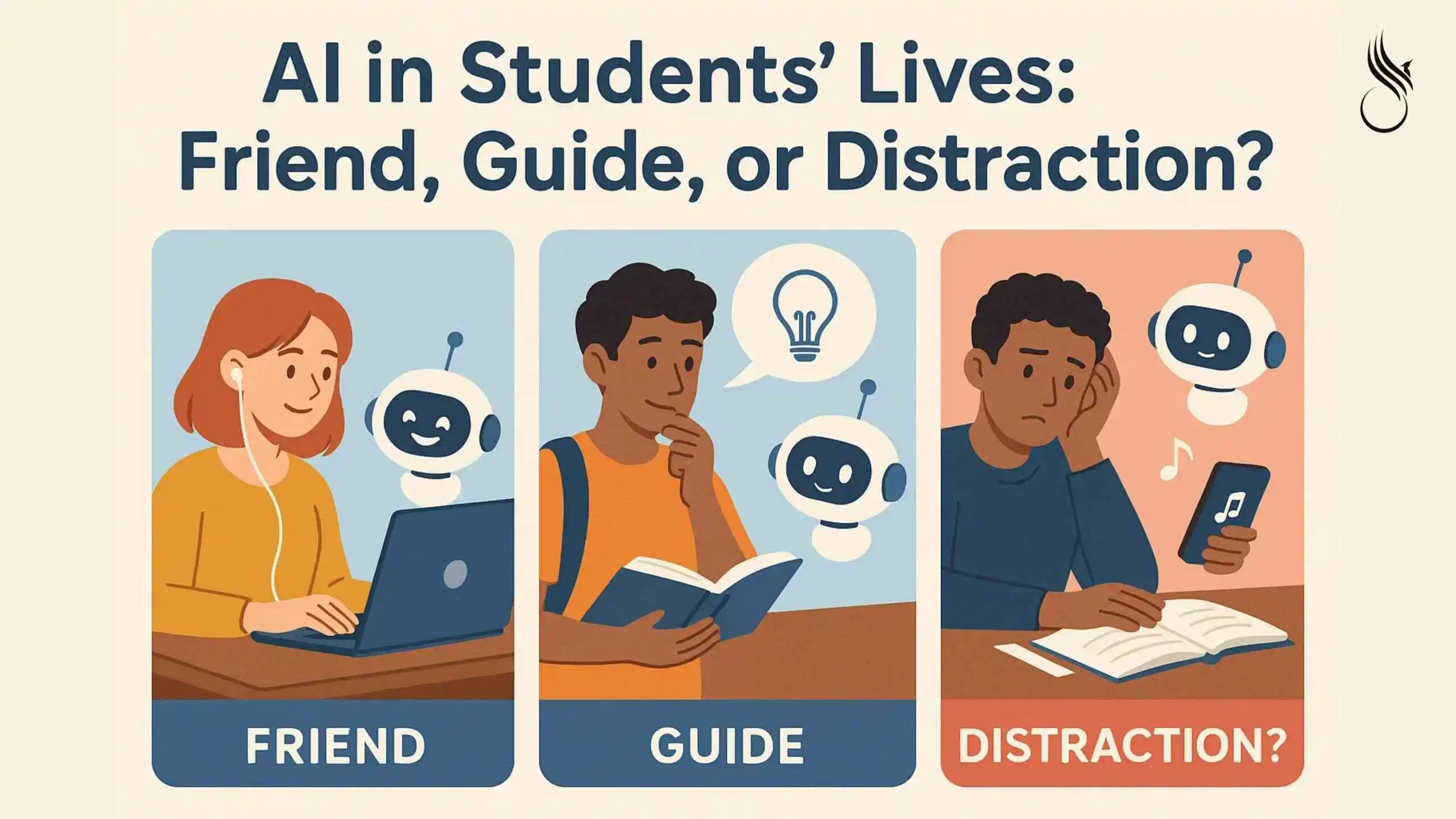
AI in Students Lives: Friend, Guide, Distraction
In today’s digital age, Artificial Intelligence (AI) has become more than just a buzzword — it’s an integral part of students’ daily lives. Whether it’s asking ChatGPT for help with homework, using Grammarly to polish essays, or relying on AI-based study apps to stay organized, AI is quietly transforming how students learn, think, and create. But as with any technology, this revolution brings both opportunities and challenges. So, is AI a friend, a guide, or a distraction for students? Let’s explore.
AI as a Friend: Simplifying Learning and Saving Time
AI has undoubtedly made learning more accessible and personalized. Tools like Duolingo, Notion AI, and Quizlet leverage artificial intelligence in education to adapt to each learner’s pace and style. They act like digital friends — patient, available 24/7, and always ready to help.
For instance, AI can simplify complex topics into digestible summaries, generate practice questions, or provide instant feedback on assignments. This allows students to study smarter, not harder. With the right AI tools, learners can focus on understanding rather than memorizing, reducing stress and improving productivity.
Moreover, AI-powered platforms have democratized access to education. Students from remote areas can now attend global classes, access high-quality resources, and even get AI-driven tutoring, breaking geographical and financial barriers in learning.
AI as a Guide: Supporting Creativity and Growth
Beyond convenience, AI serves as a guide in modern education. It encourages students to think critically, explore new ideas, and push creative boundaries. AI tools like ChatGPT, Canva Magic Write, or Khan Academy’s AI tutor act as digital mentors, helping learners brainstorm, clarify doubts, and even refine their writing.
In research, AI-powered search engines and citation tools help students filter vast information efficiently, focusing only on credible sources. This guidance fosters independent learning — students can explore more subjects and make informed decisions about their studies or careers.
AI can also provide data-driven insights about a student’s performance, identifying strengths and weaknesses. Educators can then personalize teaching strategies to suit individual learners, ensuring that no student gets left behind.
When used wisely, AI in students’ lives can act as a compass, guiding them toward curiosity, confidence, and continuous improvement.
AI as a Distraction: The Double-Edged Sword
However, the convenience of AI also comes with pitfalls. With instant access to ready-made answers and auto-generated essays, students may be tempted to rely on AI rather than think independently. Over-dependence can weaken critical thinking, creativity, and problem-solving abilities — the very skills that education aims to strengthen.
Additionally, AI can blur the lines between learning assistance and academic dishonesty. Some students misuse tools for shortcuts, copying AI-generated responses without understanding the content. This not only hampers genuine learning but also raises ethical concerns.
Then there’s the digital distraction factor. With AI-powered notifications, recommendation systems, and personalized content feeds, it’s easy for students to get sidetracked by entertainment instead of focusing on studies. Striking the right balance is essential — using AI as a supplement, not a substitute.
Finding Balance: Making AI a True Learning Ally
The real question isn’t whether AI is good or bad for students — it’s how it’s used. Like any tool, its impact depends on intent and discipline. Students can make AI their learning ally by using it to enhance, not replace, their efforts.
Here are a few smart ways to use AI responsibly:
- Use AI for brainstorming, not for copying answers.
- Fact-check AI-generated content using credible sources.
- Set boundaries — schedule AI use for research or study planning only.
- Collaborate with AI, letting it guide your creativity rather than dictate it.
When students embrace AI with awareness, it becomes a friend and mentor — not a distraction. The future of education lies in synergy, where human curiosity meets AI intelligence.
Conclusion: Friend, Guide, or Distraction — You Decide
AI is neither inherently good nor bad — it’s a mirror reflecting how we use it. In the lives of students, AI can be a friend that simplifies learning, a guide that encourages growth, or a distraction that hinders focus. The key lies in finding balance, embracing its benefits while maintaining curiosity, discipline, and integrity.
As classrooms evolve and digital tools advance, students have the power to define their relationship with AI. When used mindfully, AI in education can empower a new generation of learners — one that’s not just tech-savvy, but also thoughtful, creative, and adaptable.
So, is AI your friend, guide, or distraction? The answer depends on how you choose to learn in the age of intelligence.